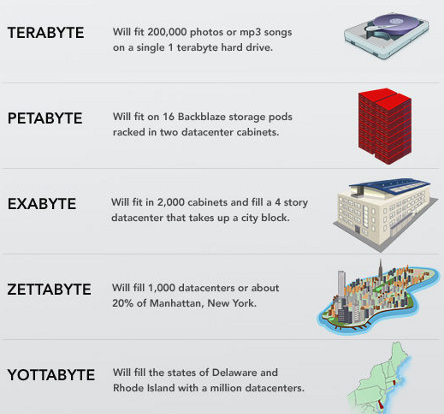
Our digital universe is rapidly expanding, and we're collecting the data. We're gathering social media data, machine data, transactional data, and research data. Information from each tweet on Twitter, like on Facebook, and view on Youtube are recorded. Consumption patterns are tracked at superstores, corner stores, grocery stores, and liquor stores. From the quark to the universe, from the Genome Project to the NASA's New Horizons mission, our researchers are recording and storing data. Data collection is everywhere, and it's big.
How big is big? Visualizing the volume of Big Data
Big Data is generally measured in the petabyte to zettabyte range.
According to the Digital Journal, the volume of global data is doubling every two years. As the volume of global data increases, the cost of storage decreases.
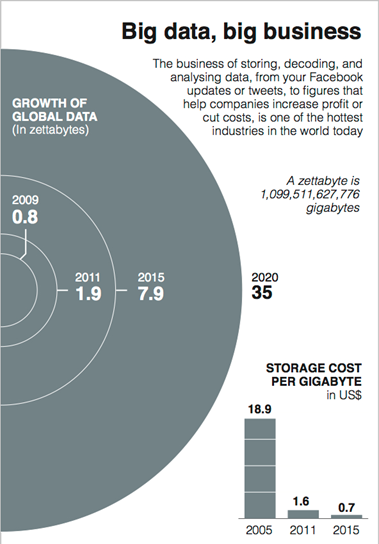
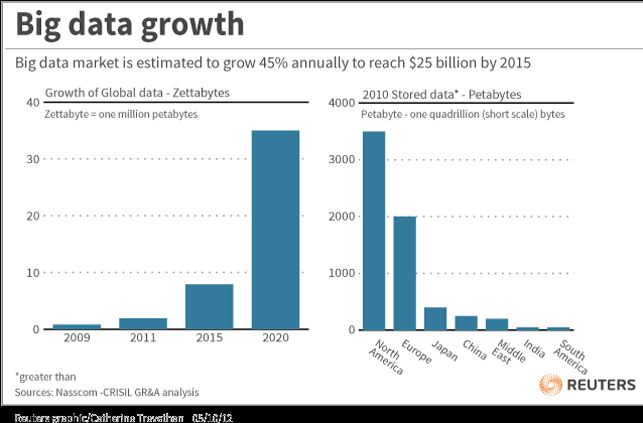
<http://blog.thomsonreuters.com/index.php/big-data-graphic-of-the-day/>
Whose using Big Data?
Forbes combined search analytics and the latest Gartner forecast on Big Data to glean who are the largest Big Data consumers.
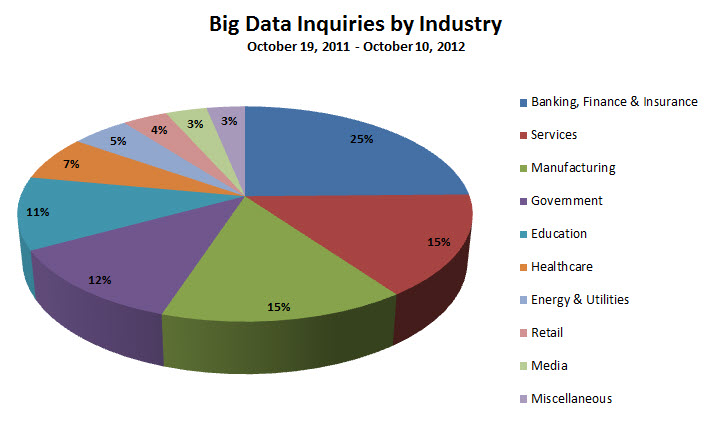
How is Big Data used?
Big Data is seen as the next frontier for innovation, competition, and productivity. Businesses, governments, and research institutions are investing in ways to harness the full potential of the Big Data frontier. Next week I'll take a deeper dive into the Big Data consumers, and how they're using this vast expanse of data to solve real problems and (hopefully) improve our human experience.